Neelagiriseya
Eastern Province, Lahugala
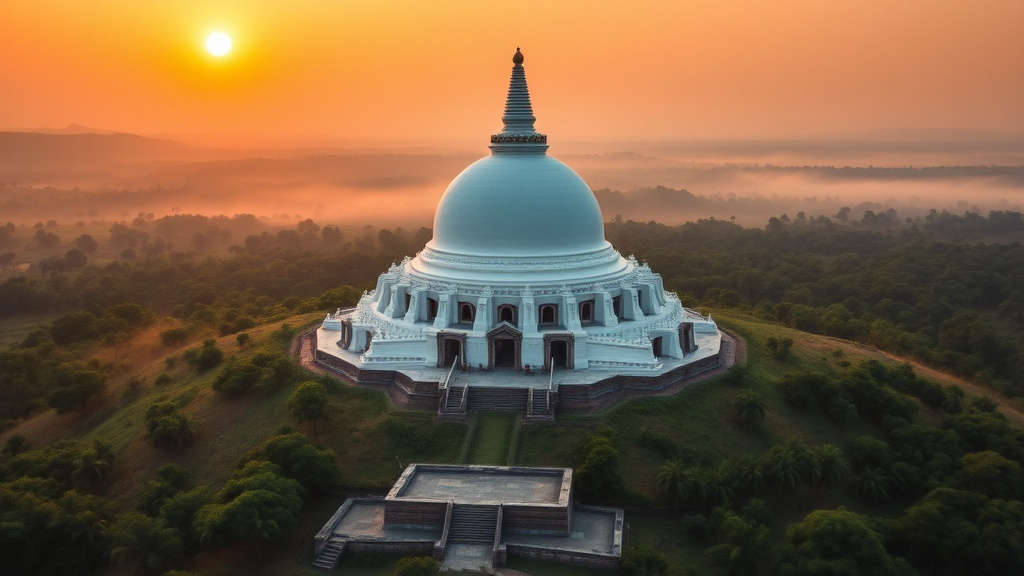
Imagine standing before a colossal stupa rising 22 metres from jungle-clad hills, its massive dome whispering tales of ancient kings and sacred relics. Neelagiriseya, the **largest Buddhist stupa in Sri Lanka's Eastern Province**, beckons you to uncover its timeless allure amid Lahugala's wild heart. This protected gem blends profound heritage with untamed nature, perfect for your next soul-stirring escape.
What to See & Do
You'll be awestruck by Neelagiriseya's sheer scale—a circumference of **182 metres** encircling a 22-metre height, perched on a hillock within **Lahugala National Park**. Climb one of three staircases flanked by stone lions to the summit, where panoramic jungle views unfold, teeming with elephants, leopards, and birds.
Explore the sprawling **36-hectare archaeological complex**: wander ruins of ancient buildings, trace weathered boundary walls, and peer into serene ponds. Spot the vihara across a lotus pond, and feel the site's sacred energy. It's ideal for peaceful reflection, photography, or gentle wildlife spotting—bring binoculars for birdwatching from the stupa top.
History & Significance
Neelagiriseya, possibly built by **King Kawantissa** or **King Bhatikabaya**, stands as a pillar of the ancient **Rohana Kingdom**'s Buddhist heritage. Known anciently as *Uttara Seevali Pabbata Viharaya*, it was renovated in the 7th century and first referenced modernly by A.M. Hocart after his 1928 visit.
Neglected for decades due to LTTE activities, restoration flickered in **1979-1984** before abandonment. Post-2009 peace, a **2011 archaeological survey** by 13 experts unveiled a golden casket with **Buddha relics**—confirmed by inscriptions—and the vast complex. Efforts resumed with Sri Lanka Air Force and Civil Defense support; relic chambers at 66 feet are planned for completion in **March 2025**.
Practical Visitor Information
There's **no entry fee**, making it accessible for all. As a protected archaeological site and popular attraction, it's open daylight hours—dawn or dusk best for cooler temps and wildlife. Expect rough terrain; sturdy shoes essential. Best time: dry season (May-September) to avoid mud, though jungle humidity persists year-round.
Getting There
From Colombo or Batticaloa, head to the **305 km post on the Colombo-Batticaloa Highway (A4 road)**. Turn onto the gravel road, crossing a stream—possibly by tractor as it's undeveloped. It's near Siyambalanduwa and Pottuvil towns, about 3km from the stream to the site. No public transport direct; hire a 4x4 or join a park safari from Lahugala.
Tips for Visitors
- Wear long sleeves and repellent—jungle means insects and wildlife proximity.
- Carry water, snacks, and a hat; no facilities on-site.
- Respect the sacred space: modest dress, no climbing ruins.
- Go early to beat heat and spot animals; tractor crossing can be bumpy—hold on!
- Check restoration updates; by 2025, relic chambers will elevate the experience.
- Combine with Lahugala National Park for elephants—pure magic.
Nearby Attractions
- Lahugala National Park: Elephant herds, leopards, birds right at the stupa's edge.
- Siyambalanduwa town: Local vibes and supplies en route.
- Pottuvil town: Base for further Eastern Province adventures.
Accessibility
Reached by gravel road and tractor crossing stream; surrounded by jungle and wildlife; not wheelchair accessible
Opening Hours
Unknown; religious site, likely accessible during daylight hours
Related Attractions
Written by
AdminMar 21, 2026